

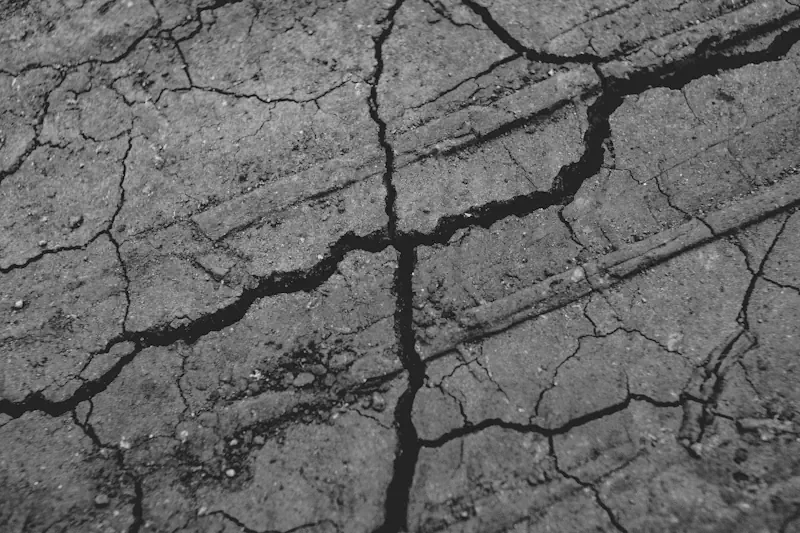
While telecommunications engineering typically prioritises network capacity, bandwidth and optical loss, the physical layer’s ultimate survival depends on geotechnical stability. For network owners building multi-decade infrastructure assets, the primary threat is surprisingly not capacity. Instead, it’s the mechanical volatility of the “Active Zone”, which is the the upper soil subject to intense seasonal moisture fluctuations.
When building critical network infrastructure, like backhaul routes on which any outage could be extremely impactful, it’s prudent to consider the ability of fibre optic cables to withstand sol conditions.
In many global regions, the soil behaves as a dynamic machine, exerting multi-vector forces that can easily exceed the physical tolerances of standard optical fiber cables. To mitigate this risk, prudent network owners are shifting toward specialised high-strength systems, such as ScaleFibre’s high-strength designs, to ensure asset protection.
The Geotechnics of “Reactive” Soils
The primary mechanical antagonist for buried infrastructure is a soil order known as Vertosols, commonly called “black soils.” These are defined by high concentrations of expansive clay minerals that undergo dramatic volumetric changes during wetting and drying cycles.
What Happens in the Soil?
The behavior of a Vertosol is dictated by its mineralogical composition, specifically the presence of specific minerals. These minerals feature a 2:1 lattice structure—essentially a microscopic molecular “sandwich” of different clay layers.
The bonds between these sheets are relatively weak. During hydration, water molecules are drawn into the intralaminar space (between the layers), forcing the layers apart. On a macroscopic scale, this molecular expansion causes the soil volume to surge, generating massive swelling pressures. On the other hand, during dry periods, the loss of water causes the lattice to collapse, resulting in soil shrinkage and the formation of deep fissures or “shrinkage cracks” that can extend several meters into the subsoil.
Global Geographies at Risk
These geologically volatile zones are strategically significant and widely distributed. Shifting, expansive soils provide challenges the world over. You have no doubt seen this in buildings, where walls crack and foundations shift due to underlying soil movement. Problematic soils occur in many places, but some specific regions are well known.

North America
A number of regions sport shifting soils, including the notorious “Houston Black”, predominant in the Texas corridor, these soils are known for their high Coefficient of Linear Extensibility (COLE), often heaving foundations and shearing conduits with enough force to snap traditional utility mains. A huge amount of damage occurs every year as a result of the “Houston Black” expansive soils.
Europe
In Spain’s Extremadura region, in an area known as Tierra de Barros, the Pellic Vertosols undergo extreme subsidence. In the UK, the Lias Group clays are high-risk zones for landslide-induced shear and infrastructure failure, often along commonly used transport rights-of-way. In fact, in the UK, expansive soils are the number 1 natural ground hazard, and can shear cables and other infrastructure, causing widespread outages, leaks and bursts.

Australia
Containing the most diverse range of cracking clays globally, Australian Vertosols form deep surface fissures that allow rapid water ingress to the subsoil, triggering localized, violent swelling that can displace buried cables enormously in a single season. Telecommunications carriers across Australia face enormous challenges from these soils across many regions of the country every year. In some cases, the black soils shift so much that they create large chasms in the earth.
Failure Modes of Buried Fibre Cables
Geotechnical movement attacks a buried asset through three distinct mechanical stressors. A standard cable will eventually reach its elastic limit through one or more of these and fail.
1. Longitudinal Strain (Tension)
As soil drying occurs, the shrinking earth exerts high friction on the cable jacket, pulling it from both ends. Most optical fibers have a maximum strain tolerance of approximately 0.2% before micro-bending losses attenuate the signal or macro-bending leads to glass fracture.
2. Radial Crush (Swelling Pressure)
Re-hydration triggers a rapid volume increase, resulting in a radial crush load. This swelling pressure can exceed exert huge forces on the cable jacket, acting like a hydraulic vice. Standard cables with minimal jackets offer little resistance, allowing buffer tubes to deform and press the fibers against the tube walls, inducing high attenuation.
3. Axial Compression (Buckling)
This is the most critical and ill-considered failure mode in expansive environments. When soil expands, it often pushes axially along the cable toward more stable points. Many cables feature limited strength members, mainly designed for pulling during installation. Some are reinforced with aramid yarns (like Kevlar), which offer excellent tensile strength but zero compressive strength. They are essentially ropes that go limp under pressure.
Under axial compressive loads, standard cables buckle and kink. This forces the glass fibers into a bend radius tighter than 30mm, causing catastrophic optical loss or total physical failure.
An Engineered Solution
The use of traditional “regular” cables in black or expansive soils is often prone to problems. These cables are simply not designed to handle the forces that black soils place on them, and therefore fail rapidly after even moderate shifts in soil. ScaleFibre has engineered its high strength cable portfolio to provide additional strength that resists environmental forces more readily than standard fibre optic cables. There are two broad designs - the high strength single jacket unarmoured optical fibre cable (rated at 6kN tensile strength), and the high strength non-metallic armoured optical fibre cable (rated at 20kN). The former provides around three times the tensile strength of traditional loose tube, whilst the latter provides around ten times the tensile strength (and the addition of signficantly increasing the cables ability to withstand rodent damage).
Tier 1: High Strength (6kN)
The 6kN High Strength tier provides a significant upgrade over the industry-standard 2kN tensile limit, engineered specifically to handle increased installation and environmental loads. This cable design utilises a specialised Polyethylene (PE) jacket integrated with proprietary enhancements that drastically increase its mechanical resilience without the need for additional layers. While maintaining a streamlined profile, this design focuses on maximising the cable’s tensile capacity and crush resistance, providing high durability within a single-jacket structure. This makes it an efficient choice for these types of high-load installations where standard cables are insufficient.
This cable does not provide armour, and is therefore only as rodent resistant as traditional unarmoured cables.
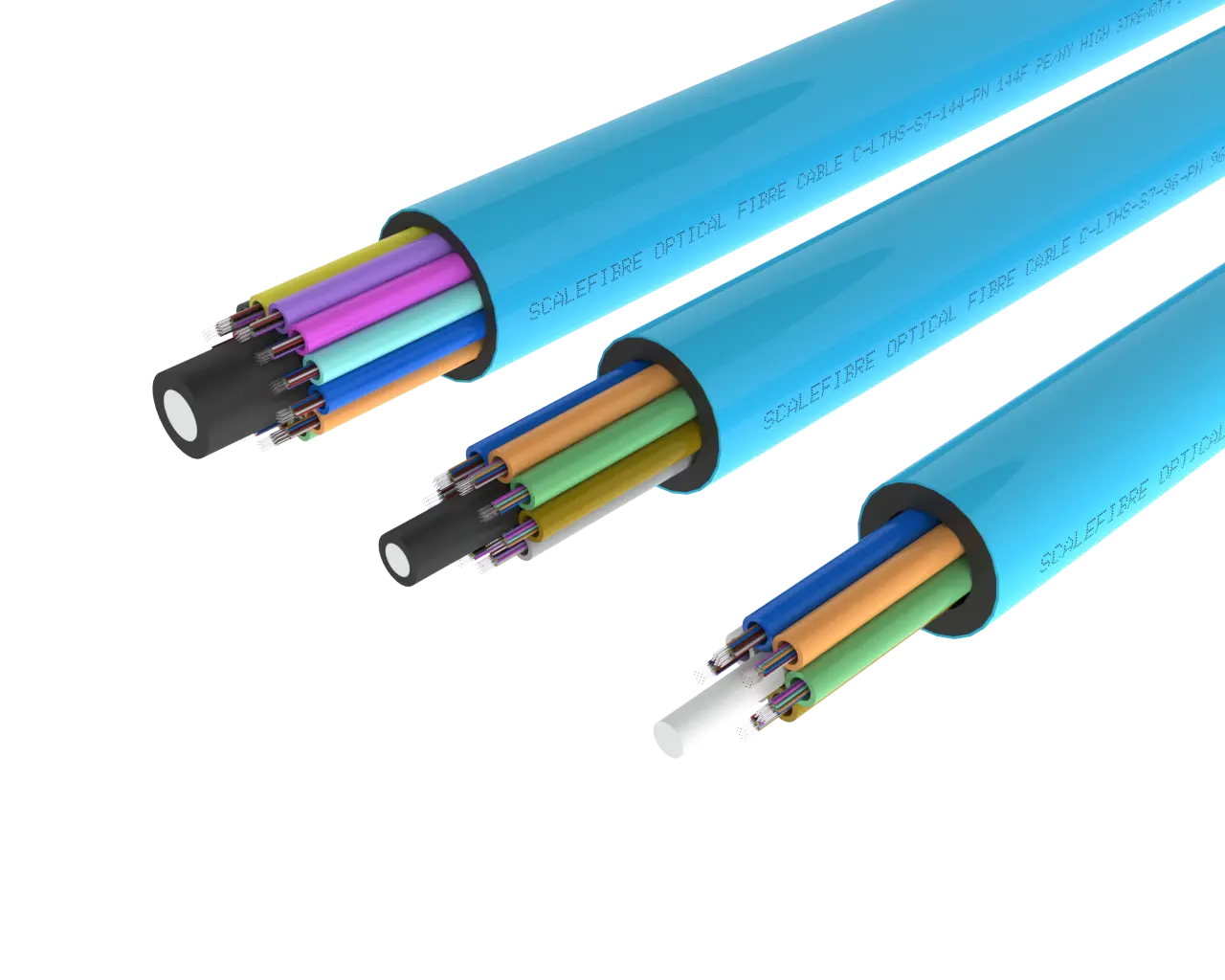
High Strength HS1 Loose Tube Outdoor Fibre Cable
High-strength, resilient loose tube for critical network routes, engineered for resilience where ground movement or harsh conditions threaten service continuity.
View Product DetailsTier 2: NMA High Strength (20kN)
The non-metallic armoured high strength design takes cable protection even further. Ideal for critical cables in high-risk soil environments, the this version utilizes solid pultruded FRP (Fibre Reinforced Plastic) rods. This is distinct from the more common glass yarn style armours, and it has the added benefit of providing signficant structural rigidity. It provides significantly more protection against rodents and other similar damage, as the FRP rods are thicker, stronger and provide more coverage than yarn style “armour”.
| Mechanical Metric | Glass Yarns (Standard) | Solid FRP Rods (ScaleFibre NMA) |
|---|---|---|
| Physical Profile | Flexible (Rope-like) | Rigid (Beam-like) |
| Axial Compression Strength | Negligible (Susceptible to Buckling) | High (Structural Column Strength) |
| Crush Protection | Low (Outer Jacket Deforms) | Superior (Rigid Protective Cage) |
| Young’s Modulus (Stiffness) | Lower (Higher Elasticity) | High (30%–75% Elongation Reduction) |
These solid rods provide Axial Compression Resistance (ACR). They act as beams that maintain the cable’s linear integrity, effectively preventing damage from compression and the buckling that compromise standard cables.
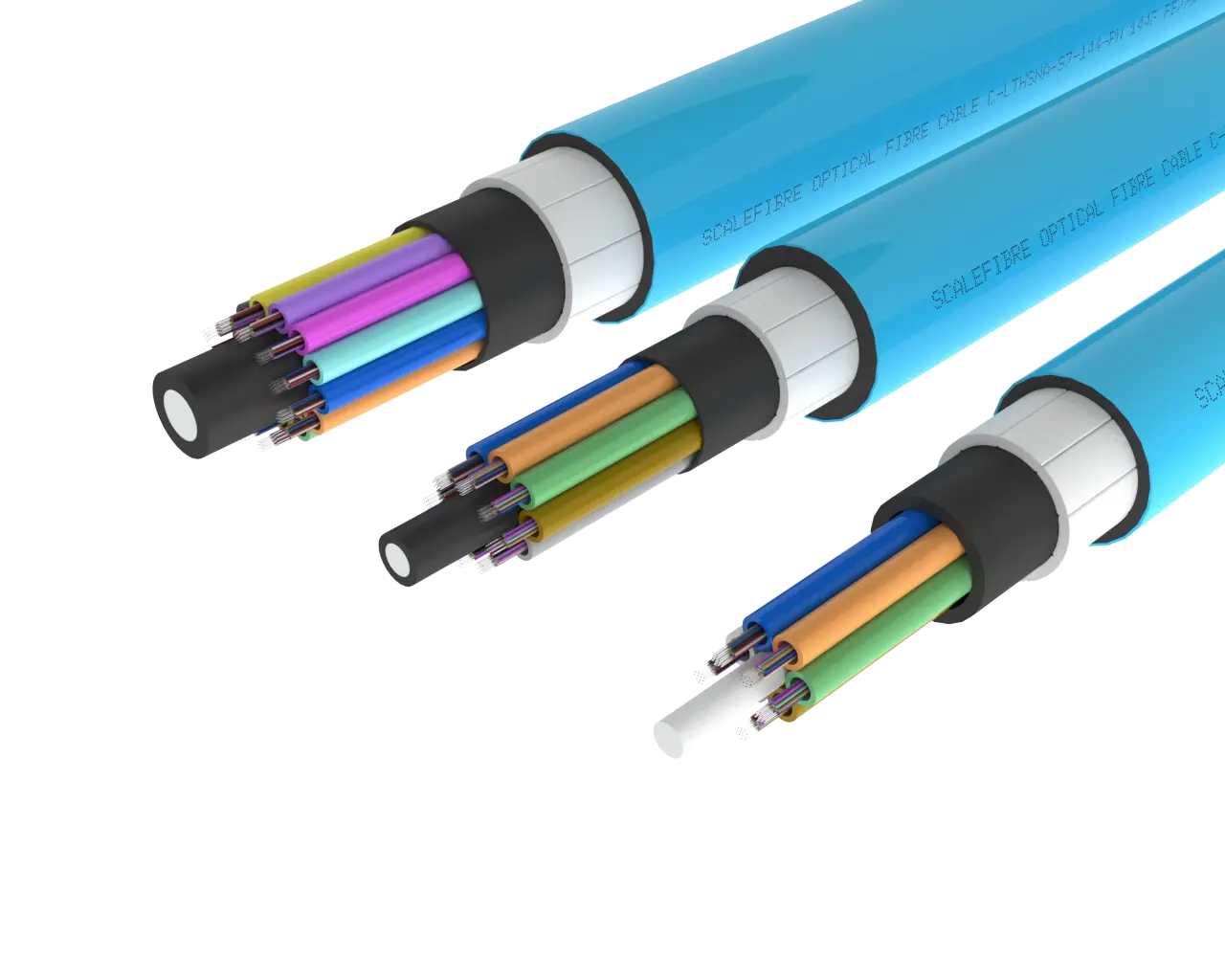
High Strength HS1 Armoured Loose Tube Outdoor Fibre Cable
High-strength, resilient loose tube for critical network routes, engineered for resilience where ground movement or harsh conditions threaten service continuity.
View Product DetailsThe Dielectric Advantage
Unlike metallic armoured cable options, which typically do not add sufficient strength for black soil applications, the all-dielectric design (metal-free) of both ScaleFibre high strength cables provides essential operational benefits for long-haul backbones:
Electromagnetic Immunity
Long-distance routes often parallel high-voltage power lines. Dielectric cables are non-conductive, protecting the network from induced currents and lightning strikes that can catastrophically melt metallic-armored alternatives.
Operational Efficiency
Unlike metallic armor, dielectric require no grounding or bonding at entry points, significantly reducing field labor and the Bill of Materials (BoM). In many jurisdictions they can also share existing electrical duct or conduit, where metallic cables are prohibited.
Chemical Stability
FRP rods are chemically inert and immune to corrosion. This is common in metallic cables in wet, acidic soils, which will adversely impact on cable system life. Not only does corrosion reduce the rodent resistance of metallic armour, but it also reduces the strength of the cable.
Conclusion
Building a sustainable digital backbone through reactive soil requires an engineering philosophy that considers geotechnical impacts. Relying on standard unarmoured or yarn-armoured cables in these environments leads to a cycle of maintenance and eventual failure. ScaleFibre’s solid-rod architecture represents the difference between a high-maintenance liability and a permanent infrastructure asset.
Ready to Protect Your Network?
Get details for our 20kN armoured high-strength cables designed for harsh environments.
Get DetailsWe'll be in touch with your specification.